
Floor tiles are a popular choice in both residential and commercial spaces for their durability, easy maintenance, and wide range of styles. However, keeping them looking their best over time requires a cleaning routine tailored to the type of tile you’ve installed. Whether ceramic, porcelain, or slate, each surface has its own care requirements.
Know Your Tiles to Maintain Them Properly
Ceramic tiles are widely used and valued for their easy upkeep. Made from kiln-fired clay, ceramic tiles are low-porosity, water-resistant, and ideal for humid areas like kitchens and bathrooms. Porcelain tiles, which are denser and even less porous, provide excellent stain resistance—perfect for high-traffic areas.
Slate tiles, made from natural stone, bring a rustic and authentic charm to any space. However, they require more care, as they are more sensitive to harsh cleaning products and can absorb moisture if not properly sealed.
Daily Maintenance to Prevent Wear
The first step to keeping your floor tiles looking like new is to integrate light but regular cleaning into your routine. Daily sweeping with a soft-bristle broom or vacuuming with a hard-floor attachment helps eliminate dust and abrasive particles that could scratch the surface over time. This is especially important for textured tiles or recessed grout lines.
After removing debris, mop the floor lightly with a damp cloth. It’s best to use lukewarm water and, if needed, a pH-neutral cleaner to protect the tiles and grout. Avoid harsh products such as vinegar or ammonia—especially on natural stone like slate—as they may damage the surface.
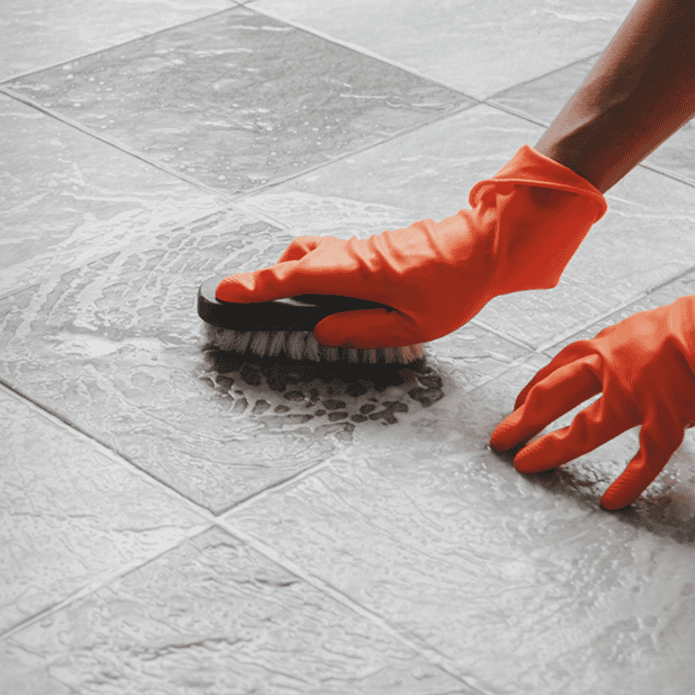
Keep your floor tiles shining with the right cleaning routine. Discover our maintenance products.
Weekly Cleaning for Deeper Freshness
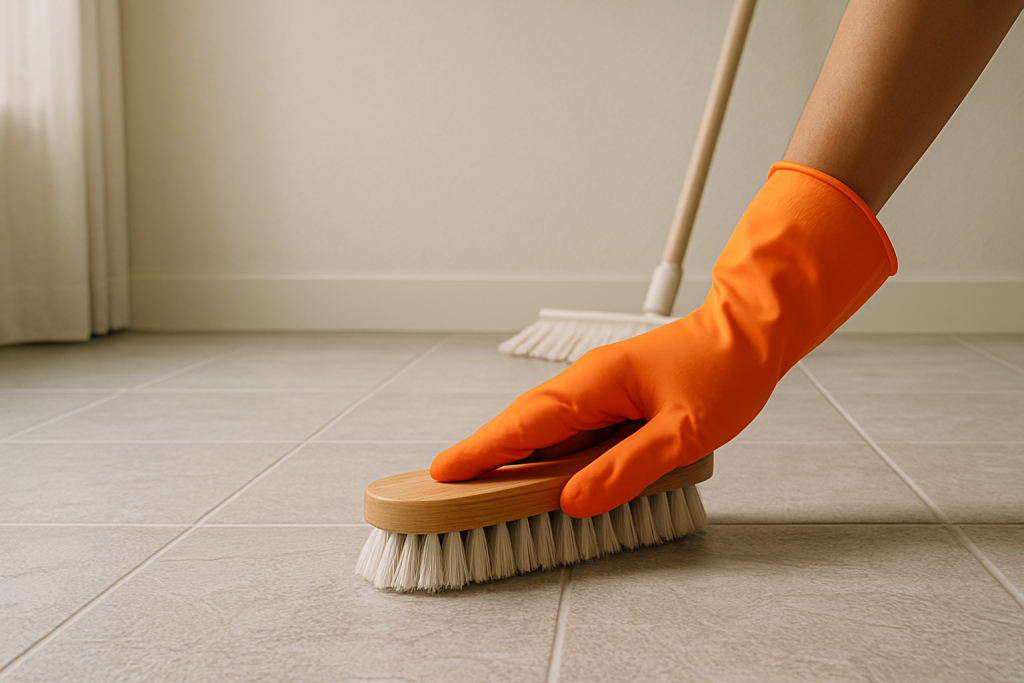
Even with daily maintenance, a deeper cleaning once a week is necessary to remove greasy residues, invisible stains, and embedded dirt. Clean small sections at a time using a well-wrung mop, rinsing frequently with clean water to avoid spreading dirt. For rough or textured surfaces, a soft brush can help lift dirt without scratching the surface.
It’s also a good idea to dry the tiles quickly—especially dark or glossy ones—to prevent streaks or detergent marks. Use a microfiber cloth or a clean, absorbent towel for best results.
Act Quickly on Stains
Stains are inevitable, but their effects can be minimized with quick action. For greasy spots caused by oil or food, sprinkle baking soda on the stain, let it sit, then gently scrub with a damp sponge.
Mold or moisture stains, often found between grout lines, can be treated with a mild soap and water solution. However, it’s important to avoid vinegar or bleach on slate, as these substances can damage the stone.
Always test any cleaning product on a small, hidden area before applying it more widely.
Tailor Maintenance to Tile Type
Maintaining your floor tiles with optimal care depends largely on the tile material. Ceramic tiles are easy to live with, but their grout lines can become dirty. Light scrubbing at regular intervals helps keep them clean and prevents bacterial buildup.
Porcelain tiles are very resilient and can handle more vigorous cleaning, as long as non-abrasive products are used. Textured or matte tiles may require more attention to keep an even appearance.
Slate, being more porous, demands extra caution. It should be protected with a quality sealer to block water, oils, and stains. This sealant should be reapplied once or twice a year depending on how often the floor is used. Daily cleaning should remain gentle and rely on products specifically designed for natural stone.
Everyday Preventive Habits
Preventing damage is often easier than repairing it. Place rugs or mats at entrances to reduce the amount of sand and abrasive dirt tracked onto your tiles. Use felt pads under furniture to avoid scratches or marks.
In humid areas, proper ventilation is crucial to avoid moisture buildup and mold. Regularly inspect grout lines to catch any cracks or discoloration early and act quickly.
Toward Easier-to-Maintain Surfaces
In recent years, tile surface technologies have advanced significantly. Some floor tiles now feature hydrophobic coatings that repel water and reduce dirt adhesion. These invisible finishes provide added protection against stains and make daily cleaning much easier.
Nanoparticle-based technology is also now found in some ceramic and porcelain tiles, giving them self-cleaning and antibacterial properties that are perfect for modern living.
To make the most of these innovations, always follow the manufacturer’s maintenance guidelines and avoid using cleaners that could degrade these specialized coatings.
Maintaining your floor tiles, whether ceramic, porcelain, or slate, doesn’t require complex solutions—just a smart and consistent approach.
By adopting the right habits from day one and maintaining your floor tiles with simple maintenance, you not only extend the life of your flooring but also contribute to a clean, healthy, and stylish living space.
Preventive care, the right cleaning products, and attention to small issues like stains or grout damage are the keys to a flawless floor. Your tiles deserve the care—they are the foundation of your home’s ambiance and elegance.
At Italbec, we know that great floor tiles need the right care to stay beautiful. Since 1984, we’ve helped clients choose the best ceramic tiles, porcelain tiles, and slate tiles—and we guide them with simple tile maintenance tips to protect their floors over time. With Italbec, you get floors that look great and last longer.