


Every natural stone slab displayed in a showroom or installed in a high-end kitchen has traveled a long and fascinating path. This journey starts deep within the Earth and ends as a beautiful, durable surface in your home or commercial space. In this article, we walk you through the entire story—from the quarry to your countertop.
1. Geological Origins of Natural Stone
The journey begins millions of years ago, far beneath the Earth’s surface. Natural stone forms through powerful geological events like magma cooling (granite), sediment layering (limestone, travertine), and heat and pressure transformation (marble, quartzite). These natural processes give each stone its unique color, pattern, and texture.
For example, marble develops graceful veining due to mineral impurities. Granite, on the other hand, has a crystalline structure that resists wear and tear. These differences influence where and how each type of stone is used.
2. Stone Quarrying and Extraction
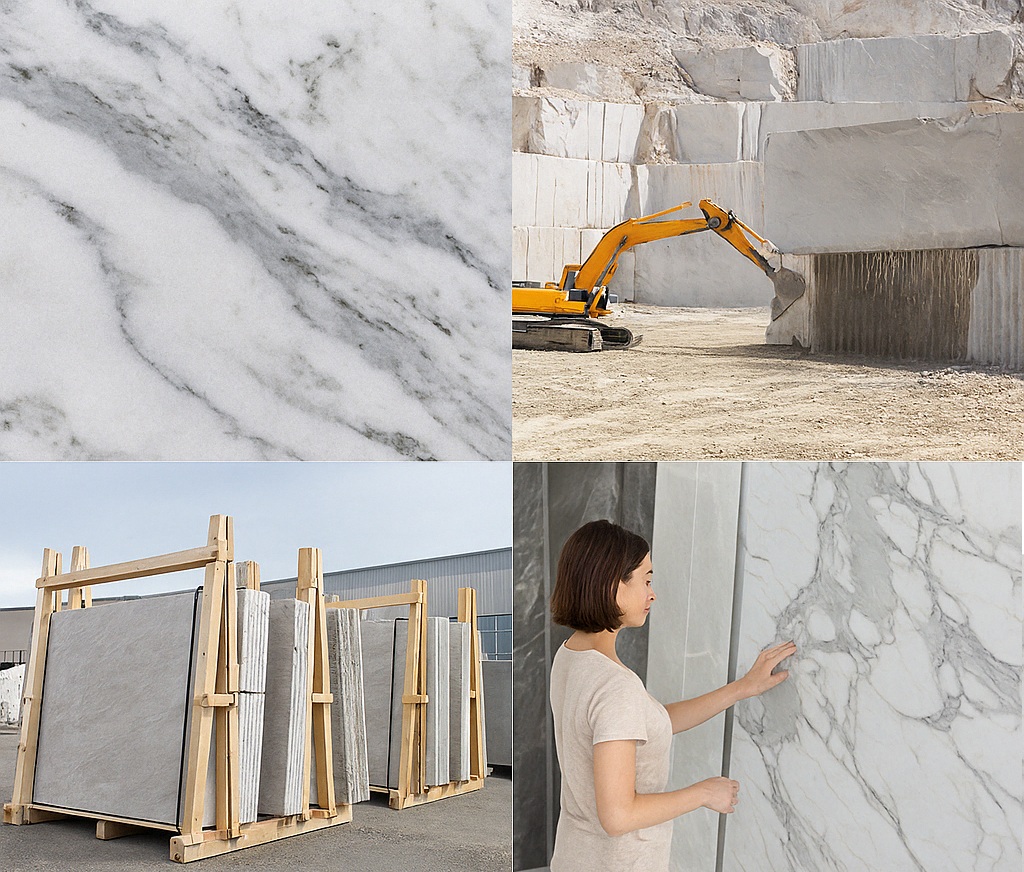
Once geologists identify a suitable deposit, the extraction phase begins. Workers use diamond wire saws and hydraulic drills to cut massive blocks—some weighing up to 30 tons—from the quarry wall.
Modern quarrying practices are more than just precise. They also prioritize sustainability through water recycling, dust control systems, and land rehabilitation plans. This helps protect both the environment and the communities around each site.
3. Factory Processing: From Raw Stone to Slab
Transporting stone slabs is a careful operation. Because natural stone is both heavy and fragile, slabs are packed vertically on special frames and moved by ship, truck, or rail.
Sustainable stone suppliers reduce their environmental impact by optimizing shipment loads and using recyclable materials. Proper planning helps ensure the slabs arrive intact and on time.
4. Global Transportation and Logistics
Transporting stone slabs is a careful operation. Because natural stone is both heavy and fragile, slabs are packed vertically on special frames and moved by ship, truck, or rail.
Sustainable stone suppliers reduce their environmental impact by optimizing shipment loads and using recyclable materials. Proper planning helps ensure the slabs arrive intact and on time.
5. From Showroom Selection to Home Installation
At the showroom, clients browse an array of stone slabs. Their choices depend on color, pattern, finish, and overall design goals. No two slabs are identical, which makes the selection process both technical and emotional.
After the perfect piece is chosen, digital measurements are taken to ensure a precise fit. Skilled installers then cut and secure the stone into place, creating a seamless and lasting surface.
6. The Value Behind Every Slab
Understanding the stone’s journey—from the Earth’s core to your countertop—highlights its true value. Each slab carries a story shaped by time and craftsmanship. Choosing natural stone means choosing lasting quality, visual richness, and natural authenticity.
It’s not just a surface. It’s a legacy.
At Italbec, we’ve helped bring natural stone into homes and businesses for over 40 years. Founded in 1984 by six Italian immigrants, our company has grown into a leader in premium stone, porcelain, ceramic, and quartz solutions.
From our 110,000 sq. ft. warehouse to our state-of-the-art workshop, we manage every step—sourcing, processing, and installation. Our experienced team offers personalized service and technical expertise, making sure your project shines from start to finish.
We believe in timeless materials that elevate any design. With Italbec, you’re not just buying stone. You’re becoming part of a story that blends tradition, innovation, and passion.
Have a project in mind? Discover our collections and let Italbec help you bring your vision to life.